

Thyssenkrupp Develops Electrolysis Technology for Chlorine Production
Thyssenkrupp Develops Electrolysis Technology for Chlorine Production
Uncategorized
16.11.2018 17:47
16.11.2018 17:47
ELECTRICITY

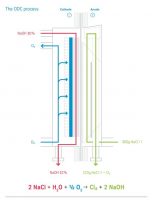 Effective contribution to more environmentally friendly and cost-effective chlorine production: Advanced oxygen depolarized cathode (ODC) technology provides 50 percent higher yields and significantly lower investment costs. About 70 percent of all chemical products use chlorine in the manufacturing process. At the same time, the production of this important base chemical is one of the most energy-intensive processes in the chemical industry. To change this, thyssenkrupp introduces NaCI-ODC electrolysis technology (ODC = oxygen depolarized cathode), which reduces power consumption and indirect CO2emissions byup to 25% compared to standard production processes.
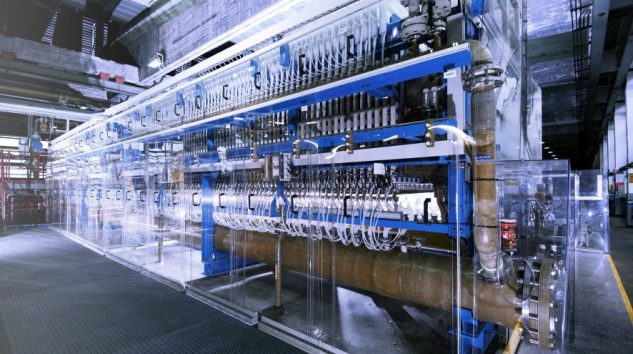 Energy consumption accounts for roughly one-third of the operating expenses of a chlor-alkali production plant. Thus, the advanced NaCl-ODC technology helps to significantly reduce energy costs. Compared to the traditional single-element design, this new method will reduce the Tarragona plant's CO2 emissions by about 22,000 metric tons per year. This corresponds to the amount produced by about 15,000 cars in a year. The application of NaCl-ODC electrolysis as the standard technology for chlorine production worldwide means the potential to save 35 million megawatt hours of energy per year. The low-cost solution for the chlor-alkali industry The original NaCl-ODC electrolysis was developed by combining two basic technologies: the oxygen-depolarized cathodes developed by Covestro were integrated into the electrolysis cells (single element technology) of thyssenkrupp Uhde Chlorine Engineers. By introducing oxygen into the cathode, often the formation of unwanted hydrogen is suppressed. This reaction is comparable to the fuel cell, but here instead of producing energy, it reduces the consumption of electrical energy. This ensures the highest energy savings when oxygen is available on site. At the end of 2015, thyssenkrupp successfully commissioned the first large-scale reference for this technology for the BEFAR Group in China. Denis Krude, CEO of thyssenkrupp Uhde Chlorine Engineers, said: "Our customers are; they expect us to provide feasible, future-oriented and at the same time environmentally friendly solutions. Our energy-saving ODC technology can make a significant contribution to the competitiveness of our customers in the chemical industry. The first large-scale plant in China has shown that this technology makes chlorine production more environmentally friendly and cost-effective." As energy prices rise and sustainability goals become increasingly important, NaCl-ODC is becoming an increasingly attractive option for future competitiveness in the chlor-alkali market. Since it is based on the overall design of the single element technology, the integration of this technology into existing facilities can be easily done. The cell size and salt water circulation are 100 percent compatible. Plant owners can easily upgrade existing infrastructures to reduce electricity consumption or increase their production capacity without the need for additional space or a new structure. Images to download for the press (source: thyssenkrupp):
-
A+Buyut
-
A-Kucult
 SİZİN DÜŞÜNCELERİNİZ?

Uncategorized
ELEKTRİK VE ENERJİ SEKTÖRÜMÜZ DUBAİ'DE MAHSUR KALDI
Uncategorized
Doğanateş Olarak Sektörümüzde Önemli Başarılara İmza Attık Atmaya da Devam Edeceğiz
Uncategorized
THE PLACE OF NYTRO BIO 300X IN SUSTAINABLE TRANSFORMER PRODUCTION
Uncategorized
Schneider Electric Turkey Agreed With FullCharger For Charging Stations
Uncategorized
OSRAM and ams continue their way as a single company
Uncategorized
Sigma Electric 2022 Business Partners Organization Took Place in TRNC
Uncategorized
BAŞOĞLU'S CABLE THAT CAN WORK UNDER HEAT AND FLAME IS AT HANNOVER MESSE
Uncategorized
ABB partners with Samsung Electronics for smart building technology
Uncategorized
Turkey's fastest electric vehicle charging stations are coming
Uncategorized
Adaptation to New and Changing Demands in Production is a Must
Uncategorized
Prysmian Group MEAT Region Marketing and Communications Director Tamer Yavuztürk
Uncategorized
DEKO AUTOMATION ELECTRICITY
Uncategorized
Aktif and Nuventura Sign Agreement for SF6 Gas-Free Cell Production
Uncategorized
Export Giants of Electrical and Electronics Sector Awarded
Uncategorized
Sigma Electric's export offensive
Uncategorized
Active e-commerce site is online!
Uncategorized
Eaton Turkey - Üçay Signs Partnership Agreement with Group
Uncategorized
Eaton Announces 'Energy Producing Buildings' Approach in Turkey
Uncategorized
Borsan's Production Facility Investment in Togo, African Country
Uncategorized
Electricity Turkey Magazine August 2021
Uncategorized
INTERNATIONAL AWARD TO YEDAŞ

