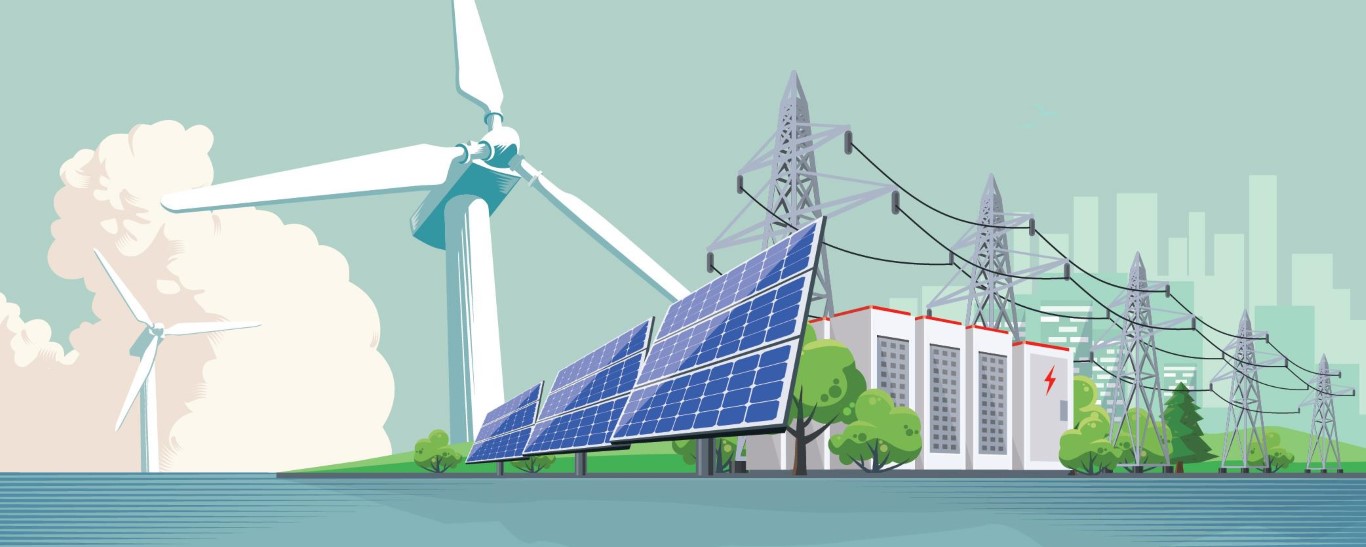
 Although switching to renewable energy is effortless, progress in the two major sectors, heating/cooling and transportation, is proceeding slowly. Governments continue to subsidize fossil fuels and keep in place the regulatory elements that underpin centralized, high-carbon energy production and consumption.
Renewable energy grew by more than 200 gigawatts (GW) of installed power capacity, making 2019 a record year. This was the largest increase so far. Capacity installations and investments continue to spread to every corner of the world. Distributed renewable energy systems have begun to provide access to electricity to more households in developed and developing countries.
Net additions of renewable power generation capacity now outpace total net installations of fossil fuel and nuclear power capacity. Globally, it has at least 10 GW of renewable energy capacity in 2019, rising to 32 countries from 19 countries a decade ago. In most countries, generating electricity from wind and solar power is now more cost-effective than generating electricity from new coal-fired power plants.
These cost reductions led to record-low bids in the bidding process, which became even more common during the year. However, competitive auctions have led to consolidation in some sectors, preferring larger multinational energy companies rather than smaller actors, including community-led groups.
Legal barriers to heating, cooling and transport continue
However, progress in the energy sector is only a small part of the picture. The barriers in the heating and cooling sector and in transportation are almost the same as they were 10 years ago. Globally, the share of renewable energy in these sectors is only 10% and 3%, respectively. Since these sectors are responsible for more than 80% of global energy demand, the share of renewables in the total final energy demand across all sectors is growing very slowly.
 Fossil Fuel Subsidies Hold Back Renewables
Renewable energy is not competing on a level playing field. Although there have been many reports about the divestment movement, fossil fuels are still heavily subsidized and funded. From 2017 to 2018, global subsidies for fossil fuel consumption rose by 30% to nearly $400 billion. This is more than double the projected support for renewable energy generation.
In many countries, new fossil fuel production and related infrastructure investments are continuing. Some countries have phased out coal, while others have invested in new coal-fired power plants, both at home and abroad. Several coal-fired power plants in Europe and the United States have announced closures. Most of the coal-fired power plants and newly built plants currently in operation are located in developing and emerging Asia.
China is a leader in many renewable energy developments. However, Chinese public finances also finance the largest coal capacity in other countries. China is followed by Japan, the Republic of Korea, France, Germany and India. Funding from private banks for fossil fuel projects continues to grow annually, totaling $2.7 trillion between 2016 and 2019.
It is possible to use 100% renewable energy
In recent years, we have seen the costs of renewable technologies, new storage technologies and digitalization fall for better integration between the energy, heating, cooling and transportation sectors. This integration will enable the transition to a world based entirely on renewable energy. In many parts of the world, examples already exist in the energy sector.
Several countries such as Costa Rica, Djibouti, and Sweden have set targets to become 100% renewable in their energy sectors, among many other countries. Iceland and Norway already generate all their electricity from renewable energy. Denmark is at the forefront of this movement with its 100% renewable energy target.
Key Point in Renewable Energy Cities
In recent years, there has been a drastic increase in the number of cities that have pledged to provide 100% of their electricity from renewable sources.
By the end of 2018, at least 100 cities worldwide are known to have 70% or more of their electricity coming from renewable sources. These include Auckland (New Zealand), Dar es Salaam (Tanzania), Nairobi (Kenya) and Seattle (United States). More than 40 cities were already supplying their electricity entirely with renewable energy. The majority of cities are located in Latin America, but they are also located in different places. Examples include the U.S. cities of Burlington (Vermont), Georgetown (Texas), and Rock Port (Missouri), as well as Reykjavik (Iceland) and Shenzhen (China).
-
A+Buyut
-
A-Kucult
 SİZİN DÜŞÜNCELERİNİZ?