Tarih: 26.09.2018 15:21

Turkey Aims to Increase Clean Energy Distribution
Turkey, which reached 31% renewable electricity generation in August 2018, has revised its renewable energy targets for 2023. [caption id="attachment_11617" align="alignleft" width="262"]
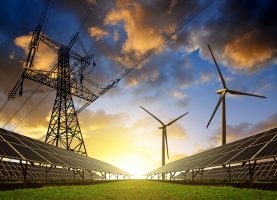
Solar panels with wind turbines and electricity pylon at sunset. Clean energy concept. [/caption] By revising its renewable energy target by 2023, Turkey has taken additional steps to increase the share of clean electricity generation from 31 percent to 50 percent. In May 2018, it was stated that Turkey's installed electricity capacity increased by 181 percent from 32 thousand MW in the last 15 years to 90 thousand MW. The share of renewable electricity generation capacity in total installed capacity increased to 46 percent in May, while renewable electricity generation was around 30 percent. In 2013, according to Turkey's National Renewable Energy Action Plan, Turkey's share of renewable electricity was 29 percent, and the share of installed clean energy capacity was around 40 percent. After renewable electricity generation reached 31 percent in August 2018, officials took concrete investment steps to revise the renewable target for 2023. On August 3, Turkish President Recep Tayyip Erdogan unveiled his 100-day action plan to develop the country's domestic energy sector with domestic energy sources, including wind, solar and geothermal energy. Earlier, he said Turkey aims to have a foreign trade volume of $1 trillion and $2 trillion in gross domestic product. As part of the country's 100-day action plan, the country aims to use more renewable energy through a series of tenders for solar power plants, which have a total capacity of 3 gigawatts (GW) and an investment of about $4.8 billion. The country plans to increase both wind and solar capacities by 10,000 MW in the next decade through renewable energy resources region (YEKA) tenders. The Turkish Ministry of Energy and Natural Resources will accept applications up to 2300 MW, one of the largest offshore wind farms in the world, which will be the first of its kind in the country. The ministry will begin evaluating consortium candidates for the wind tender, which has recently been approved. The bid auction set a megawatt-hour ceiling price of $8. It anticipates that the investor who bids and wins the lowest bid in the tender will sign an energy purchase agreement with Turkey's ministry of energy and natural resources for the first 50 terawatt hours of electricity generation since the first commissioning of the plant. Tender specifications require 60 percent domestic equipment production and 80 percent of the engineers employed must be of Turkish origin.Saros and Gallipoli in the Marmara region and Kıyıköy in Thrace were selected as candidate regions for the power plant in March. Solar energy developments In April, Turkey's former Energy and Natural Resources Minister Berat Albayrak said that Turkey's second place after China in terms of world energy demand will increase energy capacity in the sector in the process of continuous development. Albayrak said the new technology is an important element in Turkey's developing renewable energy sector. "In the last 20 years, we have seen that the role of renewable energy has changed a lot and costs have dropped drastically thanks to advanced technology," Albayrak said. Meanwhile, to support Turkey's electricity sector, Serhat Cecen, president of the Turkish Electricity Distribution Services Association (ELDER), said about $23 billion has been allocated for electricity distribution and privatization over the past 10 years. A total of $13 billion was used for distribution and retail, and $10 billion was allocated for the privatization of production facilities. The loans covered 80 percent of the total amount of privatization, while equity covered the remaining 20 percent. Despite the expenditures in the energy sector, Turkey, which attaches importance to energy efficiency, aims to save $ 30.2 billion by 2033 thanks to the National Energy Efficiency Action Plan announced in April. Both residential and industrial energy efficiency will play an important role in the action plan, which will save approximately $1 billion from the energy efficiency transformation in 1.7 million homes and save $10 billion in the industrial sector by 2023. The plan includes 55 actions to develop energy efficiency measures in various sectors in industry, transport, construction, agriculture and energy production and transformation. Albayrak said that energy efficiency is very important for a country like Turkey, which is not rich with traditional energy resources. With the help of the action plan, an investment of about $ 10.9 billion is expected until 2023, Albayrak added, adding that about 20,000 people will be employed in the energy sector, from mining to renewable energy and natural gas. The country will also be freed from having to invest $4.2 billion in construction.
Orjinal Habere Git
— HABER SONU —